Every moulding and forming tool collects build-up over time: rubber and release agent in tyre moulds, carbon and oxides on glass moulding dies, plastic residue in injection moulds. As the deposit grows, surface finish suffers, vents block and reject rates rise. Conventional cleaning, by blasting, chemicals or hand polishing, takes the tool out of production for long periods and slowly wears the very surface it is meant to protect.
Why a pulsed (MOPA) laser
A MOPA laser delivers its energy in very short pulses. The pulses lift off the carbon, residue or build-up that is foreign to the tool, while the base material underneath is not removed or damaged, and the part is not heated. That makes it suitable for sensitive, fragile and thin-gauge materials, and for fine detail such as vents, textures and engraved lettering.
Where it helps most
- Tyre moulds: rubber residue and release-agent build-up removed from treads, vents and fine detail.
- Glass moulding dies: carbon, oxide and residue removed from forming surfaces.
- Injection moulds and dies: plastic residue cleaned from cavities, ribs and textured surfaces.
- Electricals and electronics: oxides and residues removed from contacts, terminals, connectors and housings, without solvents or abrasives.
Wherever forming or moulding needs a superior surface finish, a clean tool surface is the starting point. MOPA cleaning keeps the tool in that condition, so it goes back into production clean and gives an excellent output.
And for heavy-duty cleaning
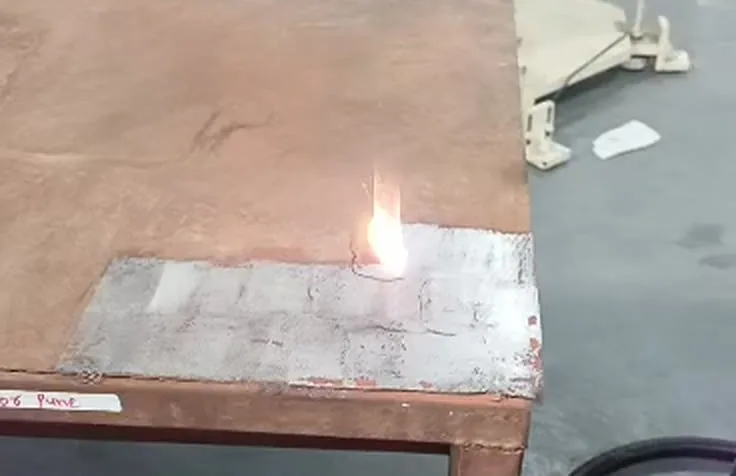
For thick rust, mill scale and paint on large steel parts, DLT uses a 3 kW continuous-wave (CW) laser instead. It replaces sand blasting, needs no chemicals, and can be taken to the component on site. Our laser cleaning page compares the two.