A worn bore is one of the most common reasons a large housing, cylinder or valve body is taken out of service. The usual fixes are well known: bore the hole oversize and fit a sleeve, line bore and accept a non-standard size, or replace the whole component. Each of these costs time and money, and a sleeve brings its own risk of loosening in service.
What laser ID cladding does differently
In laser ID cladding, a dedicated cladding head goes inside the bore and lays a metallurgically bonded, wear-resistant layer directly on the internal surface. The worn diameter is built back up and then machined to its original size. The component keeps its own material and structure, and there is no separate part that can move or come loose.
- No sleeves: no extra machining for a sleeve seat, no press or shrink fit, and no sleeve to loosen later.
- No oversize boring or replacement: the bore returns to its drawing size, saving the cost and lead time of a new part.
- A dense, bonded overlay: dilution is kept below 2%, so the deposit keeps the properties of the cladding alloy.
- Low heat input: the heat-affected zone stays small, even deep inside long bores.
What size of bore can be clad?
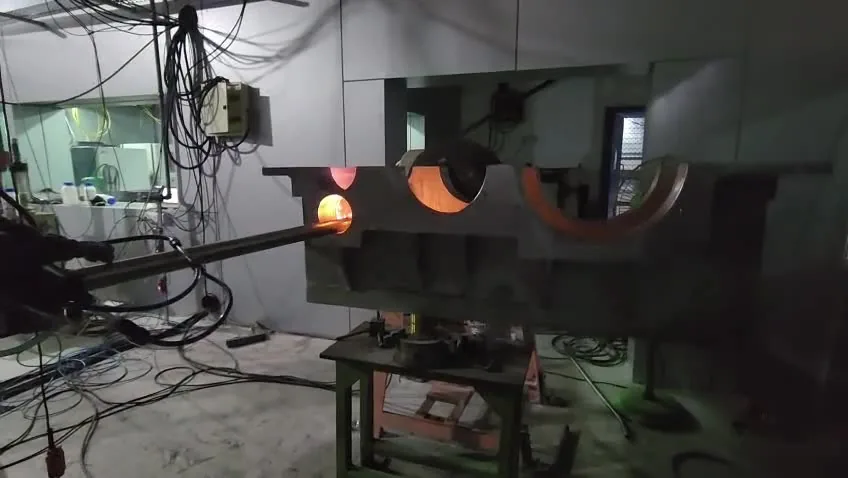
At Diamond Lasertech, we clad bores from 50 mm diameter and up to 1 m long. Within these limits, the right approach depends on line of sight, head clearance, the cladding material and the finish required. On a recent multi-bore housing, the part was turned on a positioner so the ID cladding head could reach each in-line bore, and each bore was clad in turn.
Choosing the cladding material
The overlay alloy is chosen for the service: cobalt-based alloys for wear and galling, nickel-based alloys for corrosion, and stainless or iron-based alloys where the bore mainly needs dimensional restoration. We review the base metal, the operating conditions and the drawing before proposing a process.
If you have a worn bore that is heading for a sleeve or a replacement, send us the drawing and a few photos. You can attach them directly to the enquiry form.