Materials & metallurgy
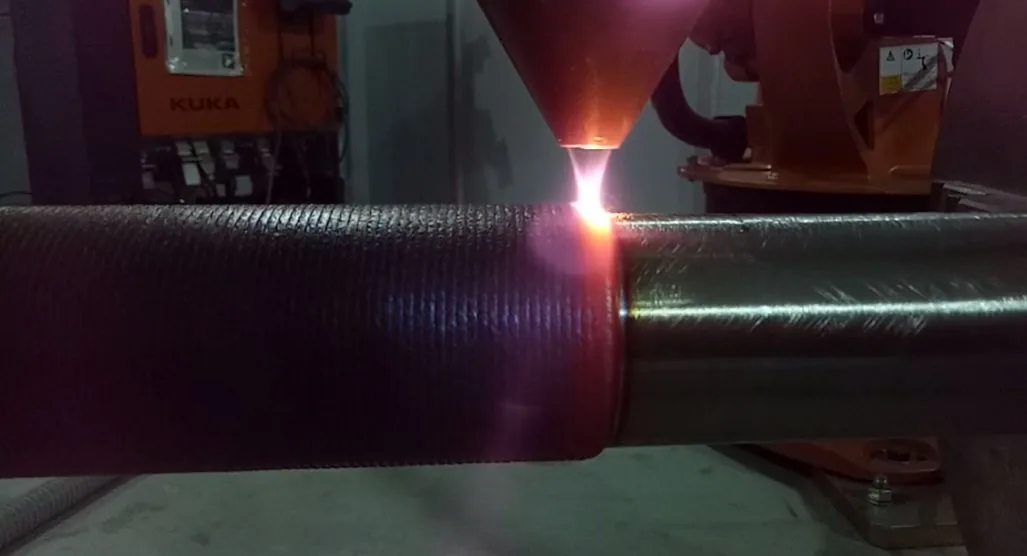
Cobalt, nickel, iron-based and carbide overlays matched to the base metal and the service: wear, corrosion, heat or erosion.
Application engineering connects component requirements, materials science, process development and validation.
Discuss Your Application →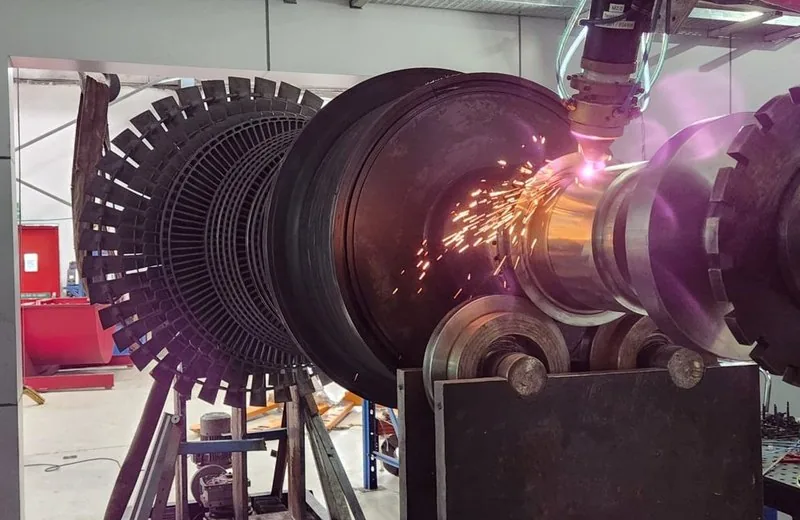
A repeatable engineering workflow from first enquiry to qualified production.
We start with the component, not the laser: drawing, material, service conditions and how it fails today: wear, corrosion, erosion, cavitation or dimensional loss.
Feasibility review of base material, weldability or hardenability, geometry and access, and a choice between cladding, hardening, welding or cleaning.
Alloy, powder and wire selection, robot path programming (KUKA KRL and FANUC), fixtures and positioners, optics and parameter development on trial pieces.
Trial parts checked against your acceptance criteria: hardness, dilution, bonding, dye-penetrant, dimensions and metallurgical sections.
The qualified procedure moves into production, or to your site, with documented parameters, inspection plan and repeatable results.
Cobalt, nickel, iron-based and carbide overlays matched to the base metal and the service: wear, corrosion, heat or erosion.
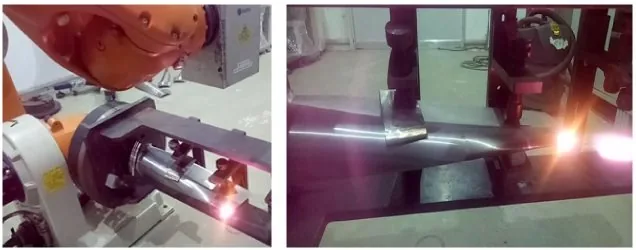
In-house path programming for KUKA and FANUC robots, positioners and the 9 m FANUC linear rails, including complex 3D contours.
Laser power, spot size, speed, overlap and powder or wire feed developed and recorded for each application; zoom optics for variable-width hardening.
Component-specific fixtures and supports for shafts, rotors, valves, blades and bores, designed with our mechanical workshop.
Hardness, dye-penetrant and dimensional checks, plus metallurgical sections and micro-structure review in our lab.
Parameter records, inspection reports and process sheets so results stay repeatable from batch to batch.
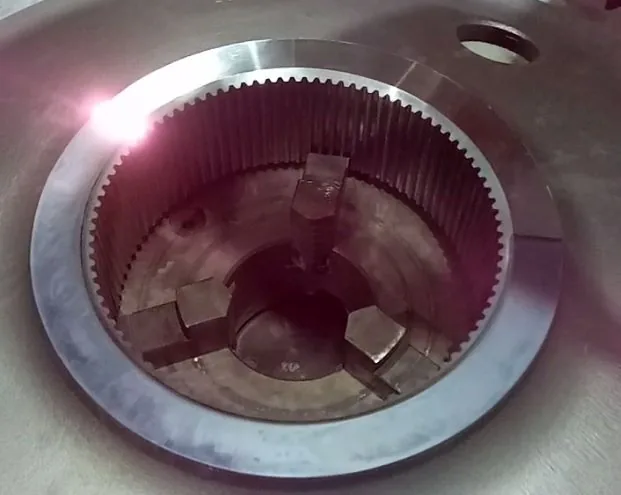
Share the component material, dimensions, wear mechanism and operating conditions. Our engineering team will review the application.
Send Your Component Details →